Categories
Uncategorized

Viridor Highland deal hastens end of landfill

MRW Viridor Highland deal hastens end of landfill Highland Council awards Viridor £58m contract as part of plans to cease landfilling biodegradable municipal solid waste Viridor Highland deal hastens end of landfill Mark Smulian Read More

Categories
Uncategorized

Four work-related injuries that often go unnoticed and can lead to health issues

In the workplace, accidents can be quite frequent, and some can result in serious and minor injuries. It has been estimated that 270 million workplace injuries occur across the world each year. SHP hears from Watermans Solicitors regarding minor work-related injuries that could lead to more serious health issues.

When it comes to the UK, work-related injuries and health issues tend to be on the daily agenda too. Every year, about 1.7 million employees will suffer from some sort of occupational ill health, and 0.4 million will end up picking up non-fatal injuries.

In the event of an accident that has happened due to the employer’s negligence and has had a negative impact on the person’s life, workers can file a work accident claim to receive well-deserved compensation. That said, it is common for less resounding incidents to go unnoticed. But the truth is, in the long run, they can gradually escalate into a bigger problem, causing extended pain and suffering.

Here, we take a look at habitual, work-related minor injuries and health problems that are often overlooked when, in reality, they shouldn’t be.

1. Slips, trips and fall-induced injuries

Slips and trips are the most recurring cause of injury in the workplace. In fact, they are responsible for more than one-third of all significant injuries and can often lead to further accidents, such as falls from height and into machinery.

Slips and trips are common because they can easily happen in any environment, from ‘standard’ offices to construction sites. Tendentially, they occur when floors are wet or contaminated due to poor maintenance and housekeeping. As they are a very frequent form of accident, it is easy to brush off the episode if there is no noticeable, immediate consequence.

However, slips, trips, and falls can originate an array of severe injuries and health issues. For instance, they may result in head and brain injuries, cuts, lacerations, soft tissue injuries to the back, and fractures. Some of these injuries may show very feeble symptoms at first. But if ignored and left untreated, they can quickly worsen and have a negative impact on the lives of those affected.

2. Whiplash injury

The nature of some jobs may require workers to hit the road on a daily basis. From couriers and florists to dog groomers and street food restauranteurs, there are many occupations where driving is an inescapable part of the job description.

When out and about, especially during rush hours, mishaps can take place at every turn. Even slamming the breaks to avoid colliding with another vehicle or a pedestrian can be harmful. You are likely to suffer an abrupt movement of the head and neck, which may result in whiplash injury. The effects of whiplash can take up to 24 hours to manifest and could be confused for tiredness or a normal headache. However, in some instances, whiplash can become a serious, long-standing condition that causes chronic pain, concentration and memory problems, and inability to sleep soundly.

Susanne McGraw, Head of Personal Injury at Watermans, said: “As part of a team of personal injury lawyers, I support many people who have suffered a whiplash injury when at the wheel of their vehicle. Most of them will recover within days, whereas others have to deal with its effects for weeks or even months.

“My recommendation is to seek medical assistance as soon as possible. This will give you the chance to get the treatment you need and alleviate feelings of discomfort in a timely manner.”

3. Noise-induced hearing loss

Work-related hearing problems affect about 14,000 employees in the UK every year. This is usually the result of spending prolonged hours in a loud environment, especially when sounds surpass 85 decibels. For instance, workers who handle electric hand tools or other sound-emitting equipment have a good chance of suffering from noise-induced hearing loss (NIHL).

The problem with NIHL is that it tends to happen and escalate gradually. This means it is difficult to catch before the damage has ultimately been made. It is likely that the sufferer will not even realise that it’s occurring until it is too late. It is important to look out for subtle symptoms such as sensations of ‘fullness’ in the ears and an intermittent or continuous buzzing. If you notice you are struggling to hear people talking a few feet away, you should start asking yourself why, especially if you work in a noisy environment.

To prevent NIHL, make sure you always wear noise-reducing earmuffs. Where possible, it is wise to collaborate with your employer to find methods to both measure and control noise levels.

4. Repetitive strain injury

Repetitive strain injury (RSI) is a common injury that happens when muscles, tendons, and nerves carry out the same action. Manual occupations often require you to perform specific motions repeatedly. This, in turn, can favour physical damage over an extended period of time.

Because the damage is gradual, RSI can go unnoticed for a long time, and it usually affects the hands, wrists, elbows, neck, and shoulders. If not diagnosed early, RSI can deteriorate and become chronic, making the recovery process very challenging. Some of its most prominent causes are constant movements such as typing, poor ergonomic conditions, and not taking regular breaks.

One of the problems with RSI is that its symptoms are easily neglected. At the start, it will only manifest itself through tingling and sensory disturbances in the forearm and hand, which quickly subside as you rest your limbs for a short while. This can wrongfully tempt people to postpone seeking medical advice.

One of the best ways to prevent RSI issues is to assume a straight sitting posture with relaxed arms and shoulders. Not only that, but it’s also to vary your movements as much as possible and avoid repetitive motions.

See your doctor

From whiplash and repetitive strain to noise and slip-induced injuries, there are many issues that can emerge as a result of work accidents and habitual job duties. If you start experiencing mild symptoms that you cannot explain, don’t put up with it – make sure to see your doctor. A medical appointment can nip the problem in the bud, sparing you from chronic pain and suffering in the long term.

Sources

https://www.hse.gov.uk/statistics/
https://www.hse.gov.uk/statistics/overall/hssh2021.pdf
https://marketbusinessnews.com/financial-glossary/occupational-injury/
https://www.hse.gov.uk/statistics/causdis/deafness/
https://www.healthline.com/health/whiplash#symptoms
https://www.hse.gov.uk/toolbox/slips.htm
https://www.bauerfeind-group.com/
https://www.highspeedtraining.co.uk/hub/common-occupational-illnesses/
https://www.finsmes.com/2021/12/6-most-common-types-of-accidents-and-injuries-that-can-occur-in-the-workplace.html

Webinar: Wellbeing by numbers

Catch-up or listen again to this session:

Learn how to use data to shape your workplace wellbeing strategy;
Hear evidence of the impact that wellbeing has on productivity and bottom line;
Get expert advice on the challenges of implementing a data-led wellbeing strategy and how to overcome them;
Understand how the changing priorities and pressures of the pandemic have influenced wellbeing programmes;
Walk away with a health & wellbeing toolkit that will help you implement and evaluate your wellbeing strategy.

Join Westfield Health CEO, Dave Capper, Professor Jeff Breckon from the Advanced Wellbeing Research Centre at Sheffield Hallam University and Sky Wellbeing Health & Fitness Manager Alistair Hugo, now…

The post Four work-related injuries that often go unnoticed and can lead to health issues appeared first on SHP – Health and Safety News, Legislation, PPE, CPD and Resources.


Read More

Categories
Uncategorized

Company fined after fatality involving MEWP

A Lincolnshire-based manufacturing company that specialises in lifting and handling equipment has been fined after an employee died after falling with a work platform onto the M25 motorway.

Rick Jeager-Fozard, an employee of Kimberly Access Limited, was carrying out a routine pre-delivery inspection on a mobile elevating work platform (MEWP) on 5 June 2013, Reading Crown Court was told.

The MEWP extended to an unsafe angle and resulted in the MEWP falling onto the M25 motorway. Mr Jeager-Fozard was working in the platform of the MEWP, falling with the device.

The HSE’s investigation found that the device had become unsafe because a mis-calibration of its secondary boom angle sensor, which started to extend even though the boom had not been raised to the necessary angle. It was found that the MEWPs secondary boom had raised to an angle around 6-degrees lower that required, the boom then extended beyond its safe working limit and tipped over.

The mis-calibration occurred through incorrect data being manually manipulated and uploaded onto the machine via a laptop using password protected WebGPI software. The carrying out of warranty repairs on the machine during this period, including granting access to the WebGPI software, fell within the conduct of Genie UK Ltd’s undertaking.

Genie UK Limited of The Maltings, Wharf Road, Grantham, Lincolnshire pleaded guilty to breaching Section 3(1) of the Health and Safety at Work Act 1974. The company was fined £270,000 and ordered to pay costs of £165,175.

HSE Inspector Stephen Faulkner said: “This was a tragic and harrowing incident. Modern high reach MEWPs rely on accurate data to ensure they extend and operate safely, and steps should be taken to ensure the process of calibrating sensors is correctly followed.

“Companies should be aware that HSE will not hesitate to take appropriate enforcement action against those that fall below the required standards.”

Safety & Health Podcast: Listen now

Exclusive interviews, the very latest news and reports from the health and safety frontline and in-depth examinations of the biggest issues facing the profession today. You’ll find all that and more in the Safety & Health Podcast from SHP.

Find us on Apple Podcasts, Spotify and Google Podcasts, subscribe and join the conversation today.

The post Company fined after fatality involving MEWP appeared first on SHP – Health and Safety News, Legislation, PPE, CPD and Resources.
Read More

Categories
Uncategorized

Council and FCC call it a day on waste contract

MRW Council and FCC call it a day on waste contract South Hams to take waste service in-house after reaching mutual agreement with contractor Council and FCC call it a day on waste contract Mark Smulian Read More

Categories
Uncategorized

Heatwave: ‘Employers should evaluate working environment in their thermal comfort risk assessment’

How businesses can ‘beat the heat’ during heatwaves. Sarah Valentine, explains.

During most seasons in the UK, it’s hard to imagine heat stress being a real danger. In fact there is nothing wrong with enjoying the heatwave, and for sun lovers, the long spell of warm weather is a treat particularly in time for the summer holiday season. But with these increasing summer temperatures, heat is now becoming a greater hazard for employers to manage in the workplace. As we begin to see the long heralded effects of climate change, employers will need to ensure practical and effective measures are in place to manage its employees thermal comfort.

Hot under the collar

Sarah Valentine

A 2018 report by the Environmental Audit Committee points to an increase in the frequency of heatwaves in the future, resulting in a significant rise of heat-related deaths by 2050. It also highlighted the Government’s inadequate handling of  the challenges extreme temperatures create, and questions whether workplace temperatures justify active regulatory intervention.

Heat stress – the law

It is acknowledged that moderate and extreme ambient temperatures increase the risk of occupational accidents. Studies have suggested that excessive heat can impair an individual’s cognitive processes. It also determined that women appear to be more vulnerable to cold environments with men having an increased vulnerability to hot environments (Barcelona Institute for Global Health).

Employers have a general duty to ensure, so far as is reasonably practicable, the health, safety and welfare at work of its employees. Explicit requirements for workplace temperatures state that ‘during working hours, the temperature in all workplaces inside buildings should be reasonable’ (Workplace (Health, Safety and Welfare) Regulations 1992). What constitutes a reasonably comfortable temperature is of course highly subjective. The HSE defines thermal comfort as being ‘between 13C and 30C with acceptable temperatures for more strenuous work activities concentrated towards the bottom end of the range, and more sedentary activities towards the higher end.’

Workplace temperatures were further considered by the Chartered Institute of Building Services Engineers which sets out recommended workplace temperatures for factories at 13C, hospitals at 16C and offices 20C. Ultimately, what will be considered a reasonable temperature will depend on the work activity and the environmental conditions of the workplace.

For a number of employers the issues of managing thermal comfort is an all too familiar challenge. Some industries are affected more than others, but heat stress is an issue all year round for foundries and smelting operations, glass and rubber manufacturing plants and bakeries. Greater care by employers in these sectors is required to ensure the appropriate controls are present and the workforce are educated in recognising the symptoms of heat stress. The same is true of employers who may have vulnerable workers who are at increased risk from seasonal changes.

Beat the heat

An employer’s duty to risk assess thermal comfort is captured under the general duties to risk assess work activities in the Management of Health and Safety at Work Regulations 1999. The HSE has published various guidance and codes of practice to assist employers in the effective management of thermal comfort. The HSE’s website has a heat stress checklist and guidance to assist in completing a thermal comfort risk assessment to review environmental factors such as air temperature, radiant temperature, air velocity and humidity as well as personal factors such as clothing and work rate.

Management of thermal comfort should not be undertaken in isolation. Employers will need to have regard to other regulations in hot conditions which may apply to their work activities. For instance the Confined Spaces Regulations 1997 and the Personal Protective Equipment (PPE) at Work Regulations 1992. An employer may need to consider if additional safeguards need to be introduced to reduce the risks of heat stress. For instance re-evaluation on PPE may be advisable if newer PPE may be lighter and provide improved levels of protection.

Employers in their thermal comfort risk assessment should evaluate the environment, the employees’ competencies and work activities. Suitable control measures could include:- permit to work at a slower rate, rotation of employees on a more frequent basis, scheduling for physically demanding work to be completed at cooler times of the day, providing more frequent breaks and drinking water, shading in the working environment and flexible working arrangements.

Additional monitoring may also be required by supervisors and managers to ensure employees continue to follow safe systems of work and wear the required PPE. Completing a similar risk review exercise will ensure compliance with the regulations and guidance, maintain a safe working environment and effectively manage the risks of working in extreme temperatures.

On the horizon

The UK is not alone in its approach to regulating workplace temperatures. Within Europe Germany, Spain and France have adopted the same approach in disseminating guidance on recommended maximum workplace temperatures. The same applies further afield in Canada, the USA and in warmer climes New Zealand. The only country the UK can look to in the regulation of workplace temperature is China. In 2012 regulations were introduced to reduce working hours in outdoor work activities during hot weather.

It remains to be seen whether we will shortly see the first HSE prosecution arising from an employer’s failure to adequately manage its employees’ thermal comfort. Although, with experts advising that extreme temperatures will be the ‘new normal’ as a product of global warming, employers should ensure heat hazards in the workplace are effectively controlled. As like the weather, we anticipate the HSE will in future turn up the heat when investigating potential breaches under this area of law.

What makes us susceptible to burnout?

In this episode  of the Safety & Health Podcast, ‘Burnout, stress and being human’, Heather Beach is joined by Stacy Thomson to discuss burnout, perfectionism and how to deal with burnout as an individual, as management and as an organisation.

We provide an insight on how to tackle burnout and why mental health is such a taboo subject, particularly in the workplace.

The post Heatwave: ‘Employers should evaluate working environment in their thermal comfort risk assessment’ appeared first on SHP – Health and Safety News, Legislation, PPE, CPD and Resources.

Read More

Categories
Uncategorized

Recycling Association slams ‘irresponsible’ plastics campaign

MRW Recycling Association slams ‘irresponsible’ plastics campaign Big Plastic Count claims that recycling doesn’t work ‘plain wrong’, says Simon Ellin Recycling Association slams ‘irresponsible’ plastics campaign Mark Smulian Read More

Categories
Uncategorized

Keep Britain Tidy lobbies MPs over glass in DRS

MRW Keep Britain Tidy lobbies MPs over glass in DRS Charity running #PainInTheGlass campaign and says nearly 1,000 people have written to MPs Keep Britain Tidy lobbies MPs over glass in DRS Mark Smulian Read More

Categories
Uncategorized

Scotland eyes offshore recycling boom

MRW Scotland eyes offshore recycling boom End-of-life wind turbines will need recycling Scotland eyes offshore recycling boom Mark Smulian Read More

Categories
Uncategorized

Strike hits Bexley over working time row

MRW Strike hits Bexley over working time row Unite says workers face longer hours as Countrystyle says strike taking place despite further negotiations through Acas Strike hits Bexley over working time row Mark Smulian Read More

Categories
Uncategorized

A guide to the Definitive Sentencing Guidelines

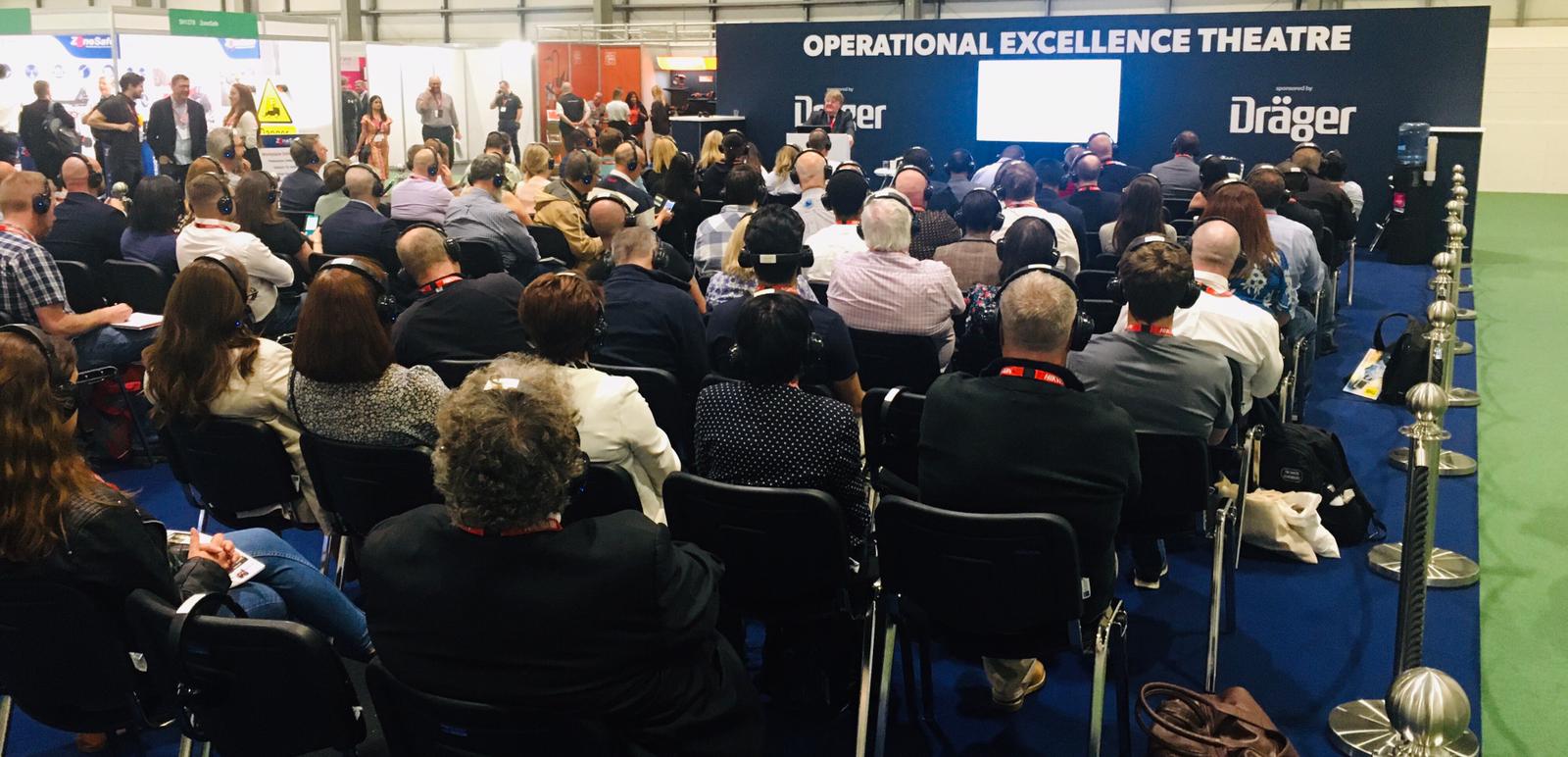
The Sentencing Guidelines the court must follow if a person or a company has been convicted of an offensive relating to health and safety, were the subject of an illuminating presentation at Safety and Health Expo in May.

The presentation was given by David Travers QC of Gough Square Chambers, who acts for a wide range of clients ranging from major commercial and industrial concerns to small businesses, directors and other individuals.

He started by explaining that the courts must follow the guidelines, unless it would be unjust to do so.

Travers also said that the first step in the guideline is to the determine the offence category, which means:

An assessment of culpability
An assessment of harm (or more correctly risk of harm)
Gravity of harm
Likelihood of harm

If more than one person was exposed to risk, or if actual injury was a direct consequence, then the court would consider whether to move up to a higher category, Travers added.

The second step in the definitive guideline determines the size of the penalty a company can face. These start with a table based on the size of the company (based primarily on turnover), whether there are aggravating circumstances, particularly previous convictions or mitigating features all of which will affect the size of the penalty.

The third step in the guideline is that the fine must be sufficiently substantial to have a real economic impact, which will bring home to both management and shareholders, the need to comply with health and safety legislation.

In addition, the court should step back and if necessary, adjust the initial fine reached at step two to ensure that it fulfils the general principles of sentencing.

The final step is whether a firm is entitled to a discount for pleading  guilty, the largest discount can come from pleading guilty at the earliest opportunity.

Travers then concluded by talking about a recent case involving WH Malcolm Ltd in which he appeared for the Office of Rail and Road who prosecuted the case where a young boy died from an electric shock after a group of lads chased a football in a Daventry rail terminal.

The company was convicted after a trial at Northampton Crown Court before Her Honour Judge Lucking QC and a jury. Sentencing W H Malcolm judge said, company’s culpability was high and there was also a high likelihood of death. As the company’s breach had caused Harrison’s death, and because a number of children were exposed to the same risk she concluded it was necessary to consider a higher starting point than would otherwise be the case. She therefore took a starting point of £4m and a range of between £2.6m to £10m.

HHJ Lucking QC concluded that the company had carried out remedial fencing work beyond that considered necessary. However, W H Malcolm’s poor enforcement history, the inexplicable failure to carry out inexpensive steps identified as long ago as 2013, and the terrible effect of Harrison’s death on some of the children present when he died, led her to impose a fine of £6,500,000.

The Court of Appeal dismissed W H Malcolm’s application for permission to appeal.

The fine of £6,500,000 is believed to be the largest Health and Safety fine in over two decades and the largest ever imposed under the Definitive Guideline.

When SHP met Louis Theroux…

The Safety & Health Podcast brings you the full recording of Louis Theroux’s keynote session at Safety & Health Expo.

Louis sat down with SHP Editor Ian Hart, in front of a packed Keynote Theatre audience, to discuss all things, from communicating effectively and working in hostile to health and health and wellbeing.

The post A guide to the Definitive Sentencing Guidelines appeared first on SHP – Health and Safety News, Legislation, PPE, CPD and Resources.

Read More

Generated by Feedzy