Categories
Uncategorized

McCarthy Marland acquires skip firms Aasvogel and Valley Trading

MRW McCarthy Marland acquires skip firms Aasvogel and Valley Trading Bristol waste firm doubles in size as turnover expected to increase to £18m McCarthy Marland acquires skip firms Aasvogel and Valley Trading Corin Williams Read More

Categories
Uncategorized

£600K fine for construction company after death of seven-year-old

A civil engineering firm has been fined £600K for safety breaches after a seven-year-old child became trapped and suffocated on a construction site.

Seven-year-old Conley Thompson went missing from home on the morning of 26 July 2015 and was found the next morning by workers at the construction site at Bank End Road, Worsborough, in South Yorkshire.

The Health and Safety Executive (HSE) found that Conley had become trapped in a drainage pipe, which had been fixed into the ground in preparation for the installation of fencing posts. Tragically, he had suffocated before being found the next morning when work restarted on site.

Howard Civil Engineering Ltd pleaded guilty to breaching regulation 13(4)(b) of the Construction (Design and Management) Regulations 2015 and to breaching Section 3 (1) of the Health & Safety at Work etc Act 1974. The company was fined £600K and ordered to pay £42,952.88 in costs at Sheffield Crown Court on 4 August 2022.

The construction site was a new-build housing development next to an existing housing estate and adjacent to busy pedestrian footpaths and roads. HSE found that there was insufficient fencing in place to prevent unauthorised persons from accessing the construction site due to a combination of poor planning, management and monitoring of the site and its perimeter.

Speaking after the hearing, HSE Inspector Paul Yeadon said: “Conley should never have been able to be on that site. He should have been kept out.

“The construction industry should be aware of the dangers of construction sites to members of the public and any other unauthorised persons.

“The dangers to children gaining access to construction sites and treating them like a playground is an ongoing problem which must be addressed at all types of sites no matter what their complexity or size.

“The industry must do all it can to ensure children can’t access construction sites and be exposed to the inherent risks they present to prevent further tragedies like this from occurring.”


Safety & Health Podcast: Listen now

Exclusive interviews, the very latest news and reports from the health and safety frontline and in-depth examinations of the biggest issues facing the profession today. You’ll find all that and more in the Safety & Health Podcast from SHP.

Find us on Apple Podcasts, Spotify and Google Podcasts, subscribe and join the conversation today.

The post £600K fine for construction company after death of seven-year-old appeared first on SHP – Health and Safety News, Legislation, PPE, CPD and Resources.

Read More

Categories
Uncategorized

New Suez firm could bid for Suez UK waste business

MRW New Suez firm could bid for Suez UK waste business Move puts question over Veolia’s sale of Suez UK to Macquarie New Suez firm could bid for Suez UK waste business Mark Smulian Read More

Categories
Uncategorized

Cloud-based management system will transform hazardous waste handling, says Veolia

Resource management firm Veolia has introduced what it says is the first end-to-end cloud based system that can ensure compliance and traceability for hazardous and non hazardous wastes. Developed by the firms technical teams, the new system manages the complete cycle from enquiry through collection, treatment and disposal and is designed to cover more than […]

Categories
Uncategorized

Long term ‘unclear’ for Suez’s UK waste business despite sale offer

MRW Long term ‘unclear’ for Suez’s UK waste business despite sale offer Macquarie likely to sell on firm in medium term if deal with Veolia goes ahead, according to industry insiders Long term ‘unclear’ for Suez’s UK waste business despite sale offer Mark Smulian Read More

Categories
Uncategorized

Councils’ intelligent cameras to track fly-tippers

MRW Councils’ intelligent cameras to track fly-tippers Buckinghamshire Council one of 11 to deploy cameras after receiving Defra funding Councils’ intelligent cameras to track fly-tippers Mark Smulian Read More

Categories
Uncategorized

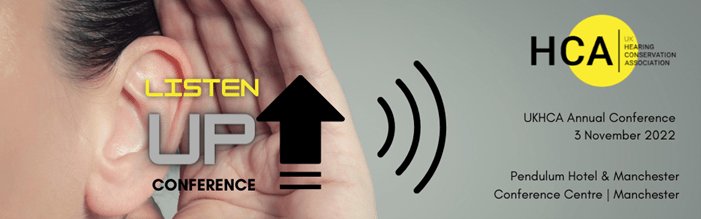
UKHCA host annual conference: ‘Listen Up’

SHP hears from the UK Hearing Conservation Association (UKHCA) as they introduce their first conference; Listen Up to be held on 3 November 2022 in Manchester. Listen Up aims to focus on the opportunities for Prevention of NOISE induced harm and Prevention of SOUND induced harm; looking beyond the workplace. 

At Listen Up you will have access to a wide variety of hearing and noise control expertise in one place. A unique opportunity to have access to the latest information, advice and strategies. Explore the innovative services and solutions our exhibitors can provide to help you protect the workforce. Together we can make a real difference, and bring to an end the escalating worldwide epidemic of noise induced hearing loss.

The full programme

NHCA: Gayla L. Poling, Ph.D.

A View from the regulator: Chris Steel, Principal Specialist Inspector (Noise & Vibration), Health and Safety Executive

What happens when we don’t protect people: Kevin Bampton, CEO, BOHS

Design and room acoustics for health wellbeing and inclusivity: A discussion between: Andrea Harman, Concept Developer, Saint-Gobain Ecophon & Dr Vanessa Champion, Director, Journal of Biophilic Design

Emerging science on hearing health harm from noise: Chris Plack, Ellis Llwyd Jones Professor of Audiology, The University of Manchester

Has noise risk reduction failed: Workshop: Peter Wilson, Technical Director, Industrial Noise and Vibration, David Greenberg (EAVE), and Rob Shepheard (Consultant Audiologist)

The psychology of success in hearing conservation: Dr Samuel Couth, Lecturer, University of Manchester

“Send three & fourpence we are going to a dance”: Noise and hearing protection in a military environment: Neal Hill, One plus One Consulting Ltd

Sound exposure away from work – how do we protect hearing for life: Dr Ian Wiggins, Senior Research Fellow, University of Nottingham

The Human Response to sound in the environment: Lisa R Lavia, Noise Abatement Society

New tools, metrics and outreach to increase the effectiveness of hearing loss prevention initiatives: Thais C. Morata, Ph.D., Senior Research Audiologist, Director, Safe-in-Sound Awards, Senior Research Audiologist, Director, Safe-in-Sound Awards

Who will benefit from attending Listen Up?

Employers, particularly from high risk noise industries e.g. construction, defence, utilities, manufacturing, oil and gas or music and entertainment
Anyone actively involved in hearing conservation such as; health and safety professionals, occupational hygienists, occupational health nurses and physicians, audiologists, scientists, engineers and acousticians
Insurers and litigation experts
Educators

What will you learn?

At Listen Up you will have access to a wide variety of hearing and noise control expertise in one place
The unique opportunity to benefit from the latest information, advice and strategies
Explore the innovative services and solutions our exhibitors can provide to help you protect the workforce
Together we can make a real difference, and bring to an end the escalating worldwide epidemic of noise induced hearing loss

Registration:

Early booking is advised as the delegate fee will rise as the conference approaches!

Member: £65
Non-member: £105
Catch-up on TV option: £25

The catch-up TV option will be available from Friday 18 November 2022 for three months, login details will be sent the week prior. The member and non-member rate also includes access to catch-up TV post event.

Opportunities available to sponsor / exhibit:

We would like to engage with innovators, leaders and motivators in hearing conservation to help us provide attendees to the conference with solutions and drivers for change. If you feel you would like to help us bring those solutions to the attention of those who need help solving hearing conservation challenges please speak to us and see how we can showcase your interventions.

If you are a not for profit or charitable organisation who share our passion for hearing health protection please contact us to discuss ways we can collaborate.

Please contact Catriona.Rice@fitwise.co.uk or call 01506 292039

Full details, to include the programme and registration click here


Safety & Health Podcast: Listen now

Exclusive interviews, the very latest news and reports from the health and safety frontline and in-depth examinations of the biggest issues facing the profession today. You’ll find all that and more in the Safety & Health Podcast from SHP.

Find us on Apple Podcasts, Spotify and Google Podcasts, subscribe and join the conversation today.

The post UKHCA host annual conference: ‘Listen Up’ appeared first on SHP – Health and Safety News, Legislation, PPE, CPD and Resources.

Read More

Categories
Uncategorized

Public grilling for Viridor on EfW expansion

MRW Public grilling for Viridor on EfW expansion Councils told by Environment Agency a full consultation due in south London as ‘substantial variation’ to permit on the cards Public grilling for Viridor on EfW expansion Mark Smulian Read More

Categories
Uncategorized

HAVS: ‘Real-time monitoring and measurement should be mandated in the regulations’

The Health & Safety Executive will fine companies that expose workers to hazardous excessive levels of vibrations. Yet the organisation’s own guidance doesn’t require businesses to continually monitor workers. Russ Langthorne of HAVSPRO considers why it’s time for real-time monitoring and measurement to be mandated in the regulations.

All shook up – is it time to revisit the regulations on vibration?

“Prolonged exposure to vibration can have a significant, harmful and permanent impact on worker health. There is absolutely no doubt about this. The science is understood, the effects are all too visible on those who suffer, and the fines imposed on negligent companies are appropriately stringent, not to mention to compensation claims they have to face.

“Nonetheless, when it comes to solving the issue, there remains extensive debate on how best to help businesses protect their employees and, by doing so, themselves.

“The essential advice contained within the Control of Vibration at Work Regulations 2005 (aka L140) has not changed substantially since its original publication, even in the second edition, dated 2019. As expressed by Health & Safety Executive inspectors, “The ONLY way to substantially reduce the risk of somebody developing vibration related ill-health is to ELIMINATE or significantly REDUCE their EXPOSURE to vibration.”

“At first glance, this is common sense, but anybody who works with vibrating equipment will quickly want to know: what happens when elimination isn’t possible? And what counts as a significant reduction?

“Elimination of exposure to vibration is a laudable goal, but it’s impractical without widespread automation – and the level of investment required to achieve it is beyond most organisations. In my practical experience, in many industries a degree of vibration is unavoidable. As a result, there still needs to be a mechanism for understanding the severity of the exposure, whenever it occurs.

“Likewise, reduction is a sensible aspiration, but again it’s something that requires a degree of thought and factual information to do properly – and that requires accurate, empirical data, in order to understand when and when action is required.

“In these circumstances, businesses need a practical means of keeping workers safe. We should all strive to eliminate vibration, but where it exists, continual monitoring is a must.

“Unfortunately, the HSE sees it a different way.”

The case against monitoring

“The Regulations don’t have much to say on the subject of monitoring; in fact, the relevant advice is contained in just two paragraphs, nos. 148 and 149.”

The key passages to consider are:

‘148 – If it helps you to do your risk assessment, a period of monitoring with these devices to understand how long employees use a particular machine in a typical day or week may be useful. However, once you have enough information on likely exposure, your focus should move to taking practical steps to reduce the exposure and risks.’

‘149 – There is no legal requirement under the Vibration Regulations for continual monitoring and recording of vibration exposure. Using logbooks and tool-timers, and continual monitoring, can distract you from your duties to eliminate or reduce vibration risks.’

“In other words, monitoring is seen as being a hindrance to the work of eliminating or reducing vibration. When the regulations were written, there was an argument that monitoring was too costly, time-consuming and unreliable to undertake continually – but in 2022, the technology exists to render this argument null and void. Modern vibration monitoring is automated, cost-efficient and accurate, offering a permanent, real-time risk assessment to avoid harm before it happens.

“If you don’t continually monitor, how can you be confident you have acted in the best way for your staff and the company?”

The case for monitoring

“Since the initial publication of these Regulations in 2005, so much has changed in terms of the technological capabilities and user benefits of monitoring technology, that, in my opinion, the case for monitoring far outweighs this, outdated view.

“There are several key reasons why mandating continual monitoring will not only protect workers on a daily basis, but actually enable businesses to focus on the longer-term elimination of exposure.

“Firstly, the data on which the HSE suggests running a short-term risk assessment is flawed. It relies on taking the technical specification of a tool as outlined by the manufacturer and applying this data against the HSE’s own ‘ready reckoner’ – a table for determining the Exposure Action Value (EAV) and Exposure Limit Value (ELV) for that tool.

“The biggest problem with this approach is that the manufacturer’s data will typically be acquired under laboratory conditions, giving no insight into the variations caused by the specific job being worked on, the condition of the tool, the consumables being used, or how the operator is using it. Continual monitoring, on the other hand, enables real-time decision-making based on the real-world environment – and, potentially, provides the data required to take informed action to reduce vibrations (for example, by replacing a blunt consumable).

“Secondly, the daily values associated with vibration risk – EAV and ELV – are cumulative. This makes the calculations made from the ready reckoner, time-consuming to aggregate and open to errors, if an operative uses more than one tool in a shift. Instantly, a lot more work is required to calculate the EAV and ELV and, as pointed out above, it still might not be accurate and it’s also retrospective, meaning the opportunity to act before any damage is done has passed.

“Continual monitoring, especially as practiced by HAVSPRO, avoids this issue, by attaching the operator’s sensor onto whatever tool they are using. Each time an individual operator uses a specific tool, they simply click the sensor onto the tool – and then, when finished, they take it with them and click it onto the next tool, and so on.

“As a result, employers receive accurate, real-time data, linked to the personalised profile of the user, delivering tangible, accurate, meaningful and relevant data to inform a risk assessment. Because the sensor data is recorded to the cloud via an on-site beacon, employers can act instantly to reduce exposure.

“Better still, over time this data will form a detailed picture of the biggest risks on-site, enabling employers to prioritise where to invest in eliminating the vibration risk to workers.”

Belt and braces

“HSE training makes a comparison between vibration monitoring and a thermometer in an office. Just because you know how warm the office is, doesn’t mean you’ve solved the problem and know when it’s too hot. You need to (for example) open the window to take action to cool the room down.

“The trouble is that, without the thermometer, will people know when to open the window? In my experience, if businesses don’t act, that’s because they don’t realise when there’s a problem. Given the ability to ‘take the temperature’ of vibration levels on a continual basis, they will undoubtedly act to reduce (and, where possible, eliminate) exposure.

“So, here’s my proposal. The regulations need an amendment, to take a more nuanced view of the benefits that monitoring brings. This doesn’t mean overruling the general advice: elimination and reduction are obviously the best solutions. Yet adding monitoring as a mandatory requirement is also a practical, effective way to protect workers.

“At HAVSPRO, we’re happy to work alongside the HSE and other monitoring providers to facilitate this amendment. Scientifically, operationally and ethically, it makes sense, to take a ‘belt and braces’ approach, to offer the thermometer as well as the open window. When it comes to the safety of your workforce, if there is more that we can do, we should do it, and do it now.”

When SHP met Louis Theroux…

The Safety & Health Podcast brings you the full recording of Louis Theroux’s keynote session at Safety & Health Expo.

Louis sat down with SHP Editor Ian Hart, in front of a packed Keynote Theatre audience, to discuss all things, from communicating effectively and working in hostile to health and health and wellbeing.

The post HAVS: ‘Real-time monitoring and measurement should be mandated in the regulations’ appeared first on SHP – Health and Safety News, Legislation, PPE, CPD and Resources.

Read More

Categories
Uncategorized

“The ‘big brother’ analogy is not only false, but unhelpful.” – Raj Singh at Crystal Ball discusses in-cab cameras

Fleet operators who cannot see what is happening in vehicle cabs have a risk management blind spot, which can be solved by introducing in-cab cameras, according to vehicle tracking provider Crystal Ball.

Employees exposed to risk in other areas of the workplace, such as warehouses, factory floors, workshops and yards are often monitored with CCTV now, and so the cab of vehicles should be too, Crystal Ball believes.

The devices, integrated into a 4G-enabled vehicle tracking system, are said to provide companies with a detailed picture of what happens when an incident occurs. Accessing video stored in the cloud could give a fleet manager evidence that their driver was not at fault, or it could provide the basis for offering further training to drivers who have not complied with company policy.

Raj Singh, Managing Director at Crystal Ball

Raj Singh, Managing Director at Crystal Ball, said: “With a host of legal obligations relating to health and safety at work, many fleet operators are leaving themselves exposed because they have a blind spot: the vehicle cab. If a business has a duty of care policy but then avoids seeing what is going on in the vehicle, and what their employees are up to, they must ask themselves if they are avoiding an essential part of driver scrutiny.

“The majority of fleet operators have adopted telematics and continue to see the benefit of it every day when it comes to giving them real-time data on their fleet.

“In research we undertook of more than 200 fleets, only 16% cited privacy concerns as a barrier to adoption of telematics. So adding on an in-cab camera to a telematics system is simple and cost-effective – businesses should go the extra mile to protect themselves, their employees and other road users.”

Singh added: “The ‘big brother’ analogy is not only false, but unhelpful. In-cab cameras don’t record sound, so they won’t catch an employee making inappropriate comments about their boss, for example. And the footage from these cameras is wiped over within a short period of time if no incident occurs.

“What these cameras do is provide a fool-proof back-up to a driver’s version of events in the case of an incident. This could be the difference between an employee losing their job after being falsely accused of a motoring offence, or having their story verified at the touch of a button.”


Crystal Ball’s steps for successful in-cab camera implementation

Explain why there is a need to install driver-facing cameras

It’s important to put foundations in place when announcing the implementation of a scheme. Present a case for doing this from a financial and safety perspective

Make it clear employees are being recorded, and why 

When installing cameras, also put notifications in the vehicle stating that occupants are being recorded, so there are no grey areas. Avoiding a situation where a driver or passenger had not given consent to being recorded, or were unaware. Also, systems such as SmartCam do not record sound, so it is important to make occupants aware of this
List which vehicles have driver-facing cameras installed, and make it available to employees

Get consent and put it in employment contracts

Having the in-cab camera policy detailed in an employee’s contract of employment provides another level of protection for a company should issues with staff arise

Data protection and privacy

Vehicle cameras fall under the remit of the General Data Protection Regulation (GDPR), so companies must put in place certain processes and follow rules about the storage and usage of what is recorded
Include information about the use of vehicle dashcams in your company policy on using, storing or processing personal data, including how long footage is stored for
It must also be securely held, with access to data and footage restricted only to employees who have been through the relevant GDPR training and are authorised to access it

Promote the safety benefits

If the vehicles carry passengers, it will also provide a safety net for them too. After all, these vehicles are still a workplace which should adhere to the same standards as in an office or warehouse
A solid driving policy with clear rules on what is allowed and what isn’t, backed up by the soft power of integrated vehicle tracking and dashcam systems

Fleets installing in-cab cameras should follow the government’s CCTV workplace advice on ‘Data protection and your Business’.

When SHP met Louis Theroux…

The Safety & Health Podcast brings you the full recording of Louis Theroux’s keynote session at Safety & Health Expo.

Louis sat down with SHP Editor Ian Hart, in front of a packed Keynote Theatre audience, to discuss all things, from communicating effectively and working in hostile to health and health and wellbeing.

The post “The ‘big brother’ analogy is not only false, but unhelpful.” – Raj Singh at Crystal Ball discusses in-cab cameras appeared first on SHP – Health and Safety News, Legislation, PPE, CPD and Resources.

Read More

Generated by Feedzy